Monday, September 18, 2017

Is the consumer confused on GMOs?

I love to see surveys that help to show what consumers think.  It is a great way to shed some light on where we need to focus when trying to educate and share the facts about our food and agricultural industry.

A recent survey from Michigan State had a few interesting insights.  Here are the results of the survey and my personal commentary on the results. 

If you are looking for the survey itself you can find it here:  http://food.msu.edu/articles/msu-food-literacy-and-engagement-poll


This is a pretty easy answer for me too.   If I could eat a banana right off a tree vs one that was pulled green and allowed to ripen in the store then I am picking the one off the tree.  While this is not always feasible, I love my tomatoes fresh from the garden.   My opinion falls right in line with most of the responses here.


As expected, labels influence all of us and can be very useful.  There are many labels on our foods and we all expect some labels to be there.  I like to look at a label and see how many calories or cholesterol it may have.   However I know these labels are truly to help me make a decision for my health.   My gripe is when labels are used for pure marketing purposes.  As an example let's take salt.  Salt is not living, it can't be genetically modified, so why does it have the label?  To make money off peoples fear?  Maybe.


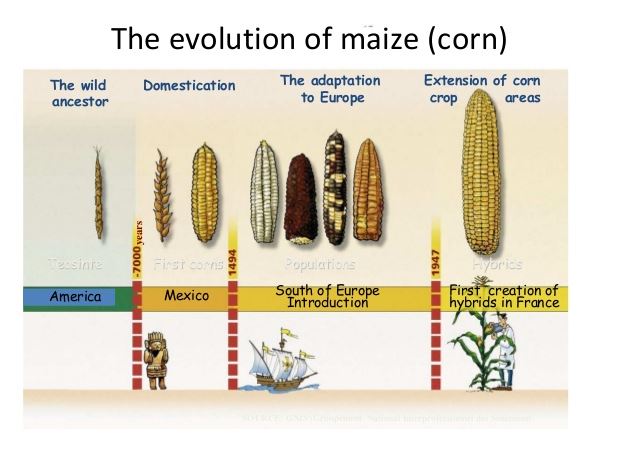
Labels are important when they truly help you make an informed decision on your health. But why do we need a label when we have 20 years of data showing no evidence that GMOs are unsafe.  The non-GMO label is a marketing scam in my opinion.   That "non-GMO" corn you may eat technically is genetically modified from crossing.  Here is what corn used to look like and yet even though hundreds of genes have been changed between what we eat now and what corn used to be, there are worries.  Yet it is this same corn that could carry a "Non GMO project" label!! 


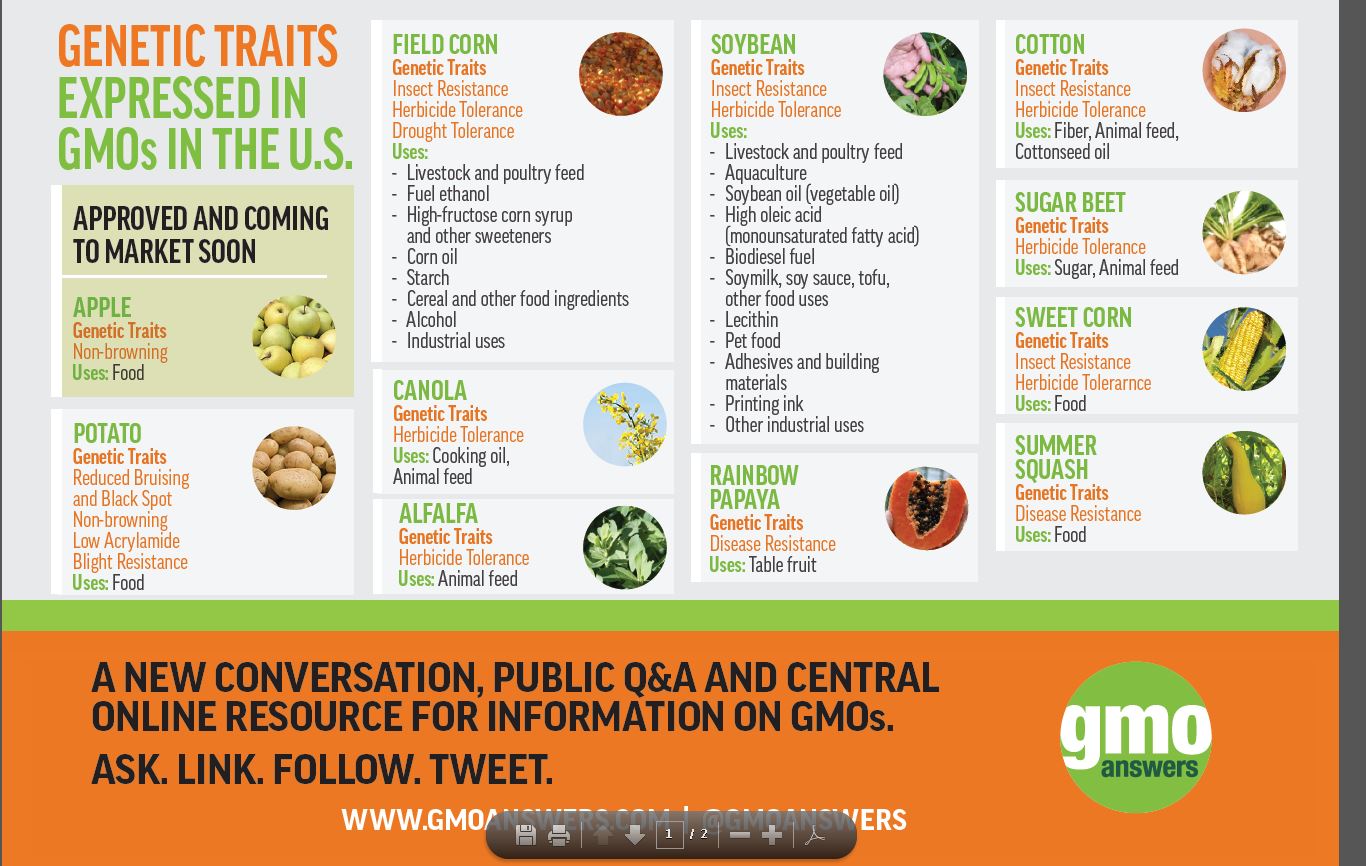
There is a large "I'm not sure" answer to this one.  Hopefully this info graphic will help shed some light on the those who are unsure.  These are the only commercially available GMOs sold in the US.  So that means if you are eating a strawberry or a steak, you are not eating GMOs because none exist on the market.


 The only thing I want to hammer home here is that by the year 2050 we need to feed a lot of people!  There is a lot about the global food system that we all can learn, but one important fact is the system needs to feed a LOT of people in the coming future.  Understanding that humanity has a challenge that we all need to address and think about goes a long way towards wanting to understand how the global food system works.

Here are the facts taken from the United Nations.  https://www.un.org/development/desa/en/news/population/world-population-prospects-2017.html


The answers are pretty split on this questions.  Some people are looking where their food is coming from and some do not.  The places our food comes from can be local or it could have come from another country.  It is always interesting to pick one thing we eat and try to do the research on where it comes from.

From a very basic high level I love these maps from national geographic that show exactly where we grow food in the world.

Theses maps comes along with a really nice article to read as well:  http://www.nationalgeographic.com/foodfeatures/feeding-9-billion/


This is our Earth and this is where we raise crops and animals.  No more land is being created and the locations we are producing our food is pretty much it.  Even with the population going to crazy numbers by 2050, this is what we have.

 The biggest thing we can do in the fields themselves is raise our yields.  This National Geographic map shows how yields currently stand.  This maps always makes me get a little nervous.  Yields are already high in many parts of the world.  There is room for improvement, but the way we produce food will need to change.  This will range from agricultural practices and political policy changes and everyone should try to understand where our food is coming from and how it is grown to help with the coming challenges.


This trend to pay more for "healthy food" seems to be gaining traction at least in surveys.  In another survey in 2015 the same trend was seen:

https://www.forbes.com/sites/nancygagliardi/2015/02/18/consumers-want-healthy-foods-and-will-pay-more-for-them/#1a6afa2f75c5


I think it really remains to be seen how all of this will play out.   I have a couple of thoughts.  Maybe US and even European consumers are willing to pay more, but they also have more money.  How about the other billions of people in the world that need to eat?   I admit I can quickly become siloed in my bubble where I have the means and choice to buy more expensive food if it really has less sodium or some other health benefit.

I also think that the word "healthy" is not defined the same across our population.  I may think sure, if product A and B are mostly the same but B has less bad cholesterol it is heather.  However if product B is GMO then I also believe it is healthy and I know for a fact many don't believe that.

Regardless I think this quote from the same Forbes article sums it up quite nicely.


I am concerned about the safety of my food too.   Who wants to go to a store, buy some lettuce and come away with a E.coli infection.   No one with a peanut allergy wants to to eat chips and have an allergic reaction because the chips were processed in a plant with peanuts.   And of course we wonder how GMOs will affect our food.  Are they safe?   Hey I wouldn't be a good scientist if I didn't ask the same questions.  I feed my kids GMOs, but because I believe in their safety.  Here are some great infographics that summarize the facts.  You can find those reports and literature with some google searching if you really want to dig in.


Organic practices yield food that can also be safe and taste good.  My biggest concern with orgainics goes back to question 5.   Once we realize that our population is going to up in a crazy way, then we realize we need to produce more food.  And the facts are pretty straightforward.  Organic is not the answer to increasing yields.   Take a good look at this study and I have attached a few slides from it as well.

https://www.scribd.com/doc/283996769/The-Yield-Gap-For-Organic-Farming


Here is some info on the study:


 This is just one set of data form that study.   Organic yields are way down for row crops compared to conventional growing methods.   As the author states, right now organic is niche, but why put so much effort into this method of farming when it is not doing anything for our world problem?


This question saddens me most I think.  I have worked in industry for about 15 years.   These questions show that industry has the most work to do to gain trust back from consumers.   I can offer to answer any questions anyone may have.   I actually love giving tours at work.  Usually the response is "wow!  that was really cool.  I know know a lot more about you do."   Find someone who works in industry and have a conversation with them.

I can promise that I believe in what I do and am happy to answer any questions.  We are people that care about our family and friends just like you.


This is the question that leads me to believe the most that consumers are confused.  The fact on this one is all living things have genes.   So GMO, organic, non-GMO, bananas, fish, human, ants, and everything in between is full of genes.  The fact that 37% of people in this survey think only GMOs have have genes show that we still have a long way to go towards understanding our food.  

All plants and animals have cells.  While there are differences in the cells,  DNA that are home to all these genes are found mostly in the nucleus.

https://www.difference.wiki/plant-cell-vs-animal-cell/


Science uses many different techniques to to mix up this DNA and create new traits.  In many ways all of our food is a GMO because genes were moved and modified to give us everything we currently eat.


When it comes to food people have very strong opinions, even if those opinions are not based on facts.  In fact a quick google search shows all kinds of information that aims to use fear to persuade you that GMOs are bad.  And when so many people think that only GMOs have genes it is real easy to persuade them that GMOs are bad.   We have to keep getting the facts out there and I hope these resources and thoughts will be a start.  


Monday, August 28, 2017

Astrophotography: Eclipse 2017

I was at work one day when someone asked me what I was doing for the eclipse?   Here in North Carolina it would not be total, but it would be over 90%.  I started thinking about it and a sick feeling rose up in my stomach.  Oh no, I think I am on vacation that week and will miss it?   Well not a bad excuse to miss the eclipse, but I hadn't seen an eclipse since I was in grade school.   Vacation was taking me to Mexico and wondered if I could see it there too?

It turns out the eclipse would be visible in Mexico, but it was only going to be a partial eclipse.  I took my camera hoping to at least get a few shots of what I could.   August 21st came and this happened to be the day a tropical depression which later would become Hurricane Harvey was moving across the Yucatan peninsula.  That meant lots of clouds!!.  I managed to squeak a picture in at the very beginning and then again at the full coverage, but since I was shooting through clouds I never got a great picture.  It was still amazing and I think I will have to take a trip in 2024 for the next one.

 Look real close and you can even see some sunspots.


It's pretty cool to see this no matter how much of the sun gets covered.  However totality is just unbelievable.   Here are some of my favorite pictures of those who where able to see totality under clear skies.  I have looked at so many of these pcitures and they never get old.

Pictures shared from one of my favorite sites:  https://www.cloudynights.com/


Monday, August 14, 2017

Taking pictures of the sun and prepping for a solar eclipse

Everywhere you look in the headlines you see something about the solar eclipse coming to the US on August 21st.   If you are like me you want to try and capture an image of this spectacular event.  Let's all hope for clear skies!  If you have a DSLR camera here is an easy way to make your own solar filter so you can take a picture of the sun.   Let me preface this by saying you have to be extremely careful.  Never look directly at the sun and even when using filters and special glasses make sure they meet the correct specifications (ISO 12312-2).

Alright let's make a filter.   This variation of a solar filter cost me 20 bucks.    The first thing I ordered was the solar filter itself in just a 4 x 4 inch sheet.   You can find this on Amazon for about 10 dollars.  It will come protected and sandwiched between two pieces of cardboard.   Here is the one I ordered.  


Next I ordered two Amazon basics UV screw on filters.   I honestly don't see much use for a UV filter in photography as far as image quality goes.  However lots of people including myself use them to protect their lens.  They are 5 dollars each on Amazon.   You need to make sure you order the correct size uUVfilter.   The easiest easy to look at the back of your lens cap and you should see the size.   In my case I ordered a 58mm UV filter.  Here they are:


Now you have everything you need.   We just need to put everything together.  Take one of the UV filters and place it on the solar filter while it it is still protected by cardboard.   I drew a circle to mark the approximate size I need to cover my lens.  


Carefully cut the solar filter in a circle.   I had to then do a little trimming, but the objective is to get it to fit in one of your UV filters.   Once you have the solar filter cut and remove the cardboard protecting it you will see it has two sides.   It has a silver side and a black side.  The silver side is the side that should face the sun.   The black side will be facing your lens.   Be careful not to touch the filter.   Tweezers can help here, but be careful not to damage the solar filter.   


Once you get the right size it will fit in the UV filter.  Take the second UV filter and screw it onto the UV filter containing the solar filter.   


Now you have a solar filter ready to attach to your camera lens.  Just screw it on.   


Even with an eclipse you can take a picture of the sun.  Just be careful not to look with your own eyes at the sun.  I use live view and tilt the LCD screen so I only view the sun through the solar filter on the screen.  


Many people are just wrapping the solar filter around the lens and holding it with a rubber band.   You can also make a similar filter with cardboard.   These will all work but the method we just went through provides a sturdy filter that will last you for years to come.   The sun is a beautiful subject to photograph even when it is not in the news.  

Monday, July 31, 2017

Our Agricultural Future: Students and Farmers

One aspect of my job I love is that I am always meeting new people.  Bayer is so big and there are new people to meet all the time.  There are also many people that come and visit us which provides another opportunity to network with new people and groups.   This week I met people from two different organisations that are really driving results in area of agriculture.

Agriculture Future of America

The first group I met with this week as they were visiting Bayer were some student leaders for the Agriculture Future of America or AFA.  The Agriculture Future of America was "created by the late R. Crosby Kemper, Jr. and other Kansas City business leaders to provide personal and professional development experiences for college students and young professionals in food and agriculture.  Today AFA focuses on personal assessment, communication, change management and lifelong learning to develop professionalism, entrepreneurial and intellectualism."

I personally was able to sit down with three of these students and two other Bayer colleagues to talk about our careers and potentially instill some insight for these future leaders.   In hindsight I think it may have been been them giving me some perspective and insight.   As I get older it is sometimes easy for me to forget what it was like being a college student and trying to find my way.   "What do I want to be when I grow up" is a heavy burden for many students and one that we all can help them with.   These young students reminded me how important it is for those of us in agriculture to share our experiences and share our love and passion for this career path.  It is easy to forget that that year after year students graduate and have to decide what they are going to do.  Talking to these students I know firsthand that having someone share their experiences goes a long way into helping them make their own choices.    I also realize that by not being proactive there is a lot of talent that may never even know how much they would enjoy a career in agriculture.


If you are like me you probably remember the FFA or Future Farmer's of America.  The AFA is another resource for our youth that should not be overlooked.   The AFA networks with academia and companies to provide scholarships, training, and internships for those that are interested and apply for these opportunities.  A clear message you will hear from those who have taken advantage of the AFA is that the AFA is about "Building Bridges."

Here was one page from an AFA brochure that gives more info:


Go check out the AFA site for more info:  http://www.agfuture.org/s/1342/rd16/start.aspx
Follow them on twitter:  @AgFutureAmerica 


Global Farmer Network

The other organization that visited us was the Global Farmer Network.  I was two for two this week because I had not heard of the Global Farmer Network either.  I had to look up more info on this group.  Here is a quick recap of what I found:

We had 4 farmers from this network come visit for a Q&A with Bayer employees.  They were a joy to talk with and had very diverse backgrounds since they came from New Zealand, India, Argentina, and the US.    It was great to see how much the farmers support agricultural technology including GM options.  Even with all of the anti-GM opposition in India, Farmer Ravichangdran who is from India was advocating for science.  Go follow him on twitter:  @FarmerRaviVKV  He is very active on twitter and can give you a great perspective on agriculture in India.

With so many false claims running rampant on social media, we need farmers like Ravi spreading truth.


He is just one of many farmers in the Global farmers network that are out there raising awareness on multiple agricultural topics.  This is a group I will definitely pay more attention to going forward.  There website is full of lot of great information.

Go check out their website:  http://globalfarmernetwork.org/

Here are other twitter names to follow for the GFN
@World_Farmers 
@GlobalFarmerNet


My eyes are opened everyday to those who are advocating for science and agriculture.   Our youth is our future and it is easy to forget that we really need to take the time to support them.  Just sharing our own experiences and listening to their concerns and challenges goes a long way.  Other times we are in  a constant fight against the myths everywhere.   In a conversation I heard it mentioned that false information is like a virus and it spreads quicker than ever with internet and social media.  Just a few sentences can create fear that is so hard overcome.  Become an advocate and share the science.  These groups represent some great resources to get you started.