Monday, July 27, 2015

GMO Labeling

One vote down and one to go.  In my opinion, the government took a positive step when the House voted 275-150 to pass the Safe and Accurate Food Labeling Act.  The bill, H.R. 1599 will give a federal mandate on how to label foods instead of each state trying to enact its own labeling rules. It is a much more consistent way of labeling, while still using some logical thinking.

A summary of the bill is below, but essentially the FDA must allow but will not require the food to be labeled as GMO.   Study after study has shown the safety of GMOs so why is a label needed?  Some consumers want a GMO label on foods that are already safe, but I don't see them getting upset about not having labels for aflatoxins, a toxin found in fugal infested grain, which actually can be harmful. Or how about how many roach parts or rat droppings are in our food.  A certain amount is allowed, but I don't see that on the label.

Check out what is allowed in your food at http://www.fda.gov/Food/GuidanceRegulation/GuidanceDocumentsRegulatoryInformation/SanitationTransportation/ucm056174.htm

Most people love rodent hairs with your peanut butter right?  I just always wonder why the consumer gets gets so stuck on GMOs when there are other things that are not questioned.   Hopefully we will see the Senate follow through on getting this bill one step closer to law.


Peanut Butter
Insect filth
(AOAC 968.35)
Average of 30 or more insect fragments per 100 grams
Rodent filth
(AOAC 968.35)
Average of 1 or more rodent hairs per 100 grams
Grit
(AOAC 968.35)
Gritty taste and water insoluble inorganic residue is more than 25 mg per 100 grams
DEFECT SOURCE:  Insect fragments - preharvest and/or post harvest and/or processing insect infestation, Rodent hair - post harvest and/or processing contamination with animal hair or excreta, Grit - harvest contamination
Significance: Aesthetic


The H.R. 1599 bill

Library of Congress Summary

The summary below was written by the Congressional Research Service, which is a nonpartisan division of the Library of Congress.

3/25/2015--Introduced.
Safe and Accurate Food Labeling Act of 2015
This bill amends the Federal Food, Drug, and Cosmetic Act to require the developer of a bioengineered organism intended as food to submit a premarket biotechnology notification to the Food and Drug Administration (FDA). A “bioengineered organism” (commonly called a “genetically modified organism” or “GMO”) is a plant or part of a plant that has been modified through recombinant DNA techniques in a way that could not be obtained using conventional breeding techniques.
The premarket notification must include the developer’s determination that food from, containing, or consisting of the GMO (GMO food) is as safe as a comparable non-GMO food. For the GMO to be sold as food, the FDA must not object to the developer’s determination. If the FDA determines that there is a material difference between a GMO food and a comparable non-GMO food, the FDA can specify labeling that informs consumers of the difference.
A food label can only claim that a food is non-GMO if the ingredients are subject to certain supply chain process controls. No food label can suggest that non-GMO foods are safer than GMO foods. A food can be labeled as non-GMO even if it is produced with a GMO processing aid or enzyme or derived from animals fed GMO feed or given GMO drugs.
The FDA must allow, but not require, GMO food to be labeled as GMO.
The FDA must regulate the use of “natural” on food labels.
This bill amends the Agricultural Marketing Act of 1946 to require the Agricultural Marketing Service to establish a program to certify non-GMO food.
This bill preempts state and local restrictions on GMOs or GMO food and labeling requirements for GMOs, GMO food, non-GMO food, or “natural” food.


Wednesday, July 22, 2015

Confirmation Bias in Science

This post draws heavily on a New York Times article I stumbled across.  If you have a few minutes take the time to solve the problem presented and read the article.  I will post the rest of my thoughts farther down to not give any surprises.


Scroll down once you have solved the problem to continue reading. 


-
-
-
-
-
-
-
-
-
-
-
-
-
-
-
-
-
-
-
-
-
-
-
-
-
-
-
-
-
-
-
-
-
-
-
-

This article brings up a very powerful term:  Confirmation Bias.    It is simply the fact that we love to hear the word "yes."   If i Google the definition I see:  
  1. In psychology and cognitive science, confirmation bias (or confirmatory bias) is a tendency to search for or interpret information in a way that confirms one's preconceptions, leading to statistical errors.
The article has some pretty staggering facts to show confirmation bias is real.

   Remarkably, 78 percent of people who have played this game so far have guessed the answer without first hearing a single no. A mere 9 percent heard at least three nos — even though there is no penalty or cost for being told no, save the small disappointment that every human being feels when hearing “no.”

 The article's focus is on how confirmation bias comes into play in politics or corporate America.  However I also see it come into play in the field of science.  The fundamental use of science is based on finding evidence to accept or reject an idea.   Science never truly proves anything since new evidence may be found as new experiments or technologies come online.  But scientists are humans too and confirmation bias is rampant.  Many times we only hear about the positive results of a study or an idea and not the failures.    Just look at a science publication and see how many papers talk about a negative result where an idea is rejected.  These "failures" happen all the time, but they are not the ones that get the spotlight.   Most talk is about the positive results only even though negative results can bring just as much value to a person or organization.  It goes back to the notion we like to hear yes and the negative results are not celebrated with an equal weight.  I really liked this article since it is a good reminder that yes is not always the best answer.   

My results are below.  While I may have looked for negative results in this simple example I realize I need to keep a handle on confirmation bias especially in the field of science.   We all want that breakthrough in science, not the "failure" of an experiment.  But it may be that failure that gives you the right answer.

If your interested in this topic, here is some other thoughts on this puzzle:


Monday, July 20, 2015

Amazing Plants: Cattails

Most people have seen cattails, but they are actually an amazing plant because you can do so many things with them.  They are considered one of the Fantastic 4; in other words one you want to know about if you were lost in the woods.


Cattails can provide several things:

1.)  Food,
2.)  Kindling for fire
3.)  First aid for cuts/burns
4.)  Utility for building

I went down to one of the ponds on my dads farm to pull up some cattails.  There are lots of parts on the cattail that are edible.  One part is the lower stalk.  If you pull a cattail up, and peel the leaves back, the stalk at the base of the cattail can be eaten raw or steamed.   If you pull the entire cattail up and get the roots, then the white parts (rhizomes) of the roots can be eaten as well, although these are best cooked.  When I went down to the pond, most of the cattails were mature, but if you catch them when the "tail" is just coming up and is immature it can also be eaten raw or steamed like a an ear of corn complete with butter. And as the "tail" matures it will produce pollen and turn yellow.  That pollen can be used in cooking and to make flour.  It is amazing the amount of food you could get from a stand of cattails.


As you peel back the leaves of a cattail you see a gel in between the leaves and on the stalk.  This gel can be applied as a first aid ointment to small cuts and minor burns.


As the "tail matures it will get fluffy.  The fluff is easy to dry and provides great kindling.  It will burn super fast, so be sure to have other small sticks for the fire to catch on to.


And the leaves and the stalk are quite strong.  They could be used to help build a temporary shelter, either to weave into the frame for walls or a roof.  If you ever need help for the wild, remember to find some cattails.


Wednesday, July 15, 2015

PLUTO!!

I'm going to keep this one short and sweet as a shout out to NASA.

When I was growing up this is what we all learned:  My Very Educated Mother Just Served Us Nine Pies.  It was a way to remember (Mercury, Venus, Earth, Mars, Jupiter, Saturn, Uranus, Neptune, and Pluto).  That's right Pluto was a planet and the science books have since been rewritten to classify Pluto as a dwarf planet.  I still have a hard time trying to re-write these new facts in my brain when my kids tell me there are only 8 planets.

But that doesn't mean Pluto still doesn't get some love.  As technology advanced as we have become, we still have so many thing left to explore in our solar system including Pluto.  And it is so far away.  The Hubble telescope was a game changer in terms of seeing in deep space and even it had a tough time seeing the tiny Pluto as seen in this image:

https://briankoberlein.com/2015/07/02/pluto-rising/   The best Hubble picture of Pluto

And then 9 and half years ago the New Horizons spacecraft was launched.  It took pictures of Pluto as it got closer and it also had a tough time resolving Pluto.


But then after a long journey New Horizons got close enough to really see Pluto for the first time in all its glory.


Pluto   www.nasa.gov


So congratulations NASA !!  You have boldly gone where no one has gone before.

Monday, July 13, 2015

GMOs: Why are we scared?

I saw an article the other day I really enjoyed reading.  It was asking the question why people are scared of GMO's?

The is no lack of studies showing GMO's are safe.  However these studies have not really alleviated concerns of GMO's for many people.  The article points out that a lot of the fears are general in nature and not necessarily a strong aversion to GMO's themselves.  It is more of a human nature issue when we are confronted with something new and don't have a lot of knowledge yet.  These are the same type of fears we have seen play out in the past with other technologies as well.   Here are just a few of the points on the generalities of why people perceive GMO's as risky.

1.  Familiarity:  GMO's are new and when something is new we perceive more risk until we become more comfortable with it.  The article has some great examples of other technologies that were feared by consumers.  Pasteurization of milk was one, but I really liked the example of microwaves.   Everyone has a microwave now, but in the 70's people were not buying them due to perceived risk.

2.  Control:  We perceive things we have control over as less risky.   This brings up the issue of labeling.  Labeling may be a viable option to let consumers feel they have more control and thus mitigate the risk they feel.

3.  Big Companies:  There is a perception that big companies are only out for money and not honest about what they are doing.  There is a natural distrust among consumers that gets bigger as a company gets bigger.  As someone who works for a big biotech company I would argue that big companies really do want to make a difference in the world.  Bayer's mission statement is "Science for a Better Life" and everything I and my colleagues do is to try and fulfill that purpose.  We are excited to make a discovery that may help farmers and consumers alike.  We strive everyday to bring a game changer to the world that is going to makes lives better.  I believe in that mission statement and work to fulfill it's promise.  This big company perception also needs to be countered because universities and small companies are also starting make an large impact on bringing GMOs to the market and developing new technology.

The article is a good read.  I think that the process of being more familiar with GMO's will lead to more widespread acceptance.  But it is a slow process.   Adoption rates of new technologies are not always fast.   I found a showing chart that maps how long it has taken the US to adopt to some new technology in our past.  It did not happen overnight.  The good news is  the adoption rates of technology have sped up through time.  Maybe better means of communication and more education have helped with the speed increases of acceptance.   In anybcase this trend gives me hope that the public will see GMO's just like the internet or a computer; a technology that is familiar and used everyday.

Give the aritcle a read:
http://www.washingtonpost.com/blogs/wonkblog/wp/2015/07/06/why-people-are-so-scared-of-gmos-according-to-someone-who-has-studied-the-fear-since-the-start/

https://hbr.org/2013/11/the-pace-of-technology-adoption-is-speeding-up/


Friday, July 10, 2015

The Drone Bug: Part 2

The first drone I talked about was a "nano" drone.  These are very small and meant to fly indoors.   This was a fun drone to learn how to fly, but another awesome thing that drones can do is aerial photography.  Drones with a camera are just like any other drone in that they come in all kinds of shapes, sizes, and price points.

If you do get interested, then a good starter drone to get a feel for the types of pictures you can get is the Syma X5C.   This drone is very susceptible to the wind so be careful, but it will take pictures well enough to see how beautiful the world looks from above and may be your gateway into a better drone with a better camera.


I took the drone to the farm over the fourth to see get an bird's eye view.


A drone selfie!

Wednesday, July 8, 2015

Amazing Plants: Catalpa Tree

I have always had a love of plants and so I thought it was only appropriate to start going over some of the cooler plants out there.

The first one is one I grew up with in my parent's back yard. It is called the Catalpa tree.  What makes this tree so amazing is that every year a caterpillar called the catalpa sphinx moth caterpillar comes and feeds on the tree in the summer.  When I visited my parent's for the fourth of July weekend, the caterpillars were everywhere and had almost defoliated the tree.    The amazing thing is the tree can take this damage and can bounce right back with its ability to quickly grow its leaves back.


My parents Catalpa tree eaten by the caterpillars


Close up of the damage


The other amazing thing is that the caterpillars are amazing fish bait.  Some anglers purposely plant these trees just so they can get the caterpillars for bait.  The best way to use the is to remove the head and turn the caterpillar inside out on the fish hook.

I always found this tree pretty amazing since I had so many memories associated with it.  Not only is it a sight to see hundreds of caterpillars on the tree, but it has a long bean like seed pod that we would sword fight with as kids.  If you ever want some great fish bait, just plant one of these trees in your backyard.


The catalpa sphinx moth catepillar

Caterpillars eating on the leaves

A second Catalpa tree growing in the yard not yet found as a food source

Monday, July 6, 2015

GMO acceptance in Hawaii

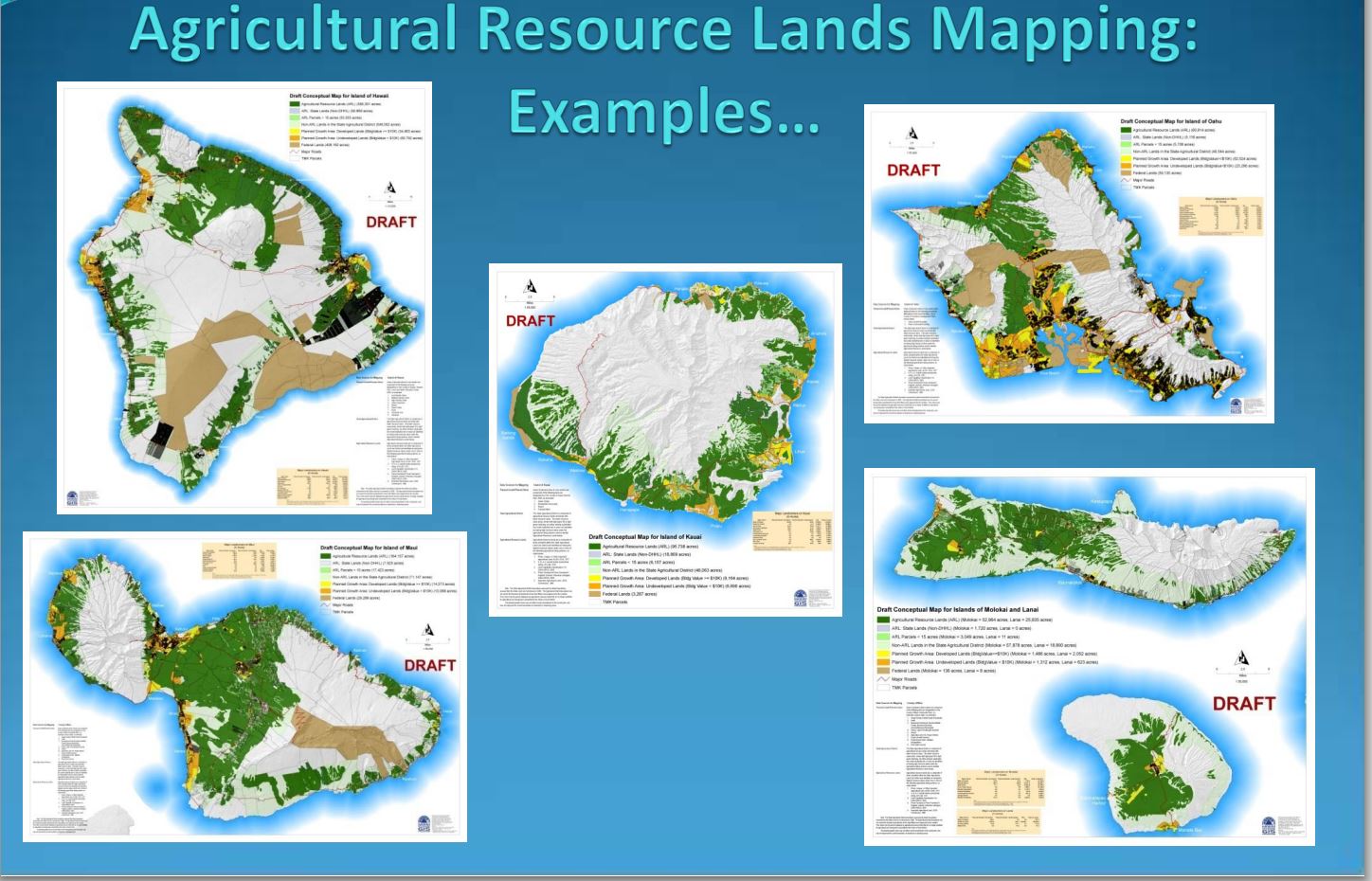
GMO acceptance in the US is a little more positive than say in Europe.  However that is not to say some strong state and local resistance to GMO in the US exists.  In my opinion one of the strongest opponents of GMOs in the US is in Hawaii.  Google Hawaii and GMO and you will quickly see a strong movement against GMOs and almost a hatred against Monsanto.

Hawaii is known for tourism, but just as important is its agriculture.  Things like pineapple and bananas may come to mind, but it can also grow crops like corn.  The are large swaths of land on all the islands that can sustain some form of agriculture.  


What really sets Hawaii apart is the fact it is the only place in the US where there is a year long growing season.  This makes Hawaii a prime place for biotech companies to grow and test their crops as well as produce seeds. For biotech companies like Monsanto and Dow, Hawaii offers the ultimate testing environment because they can test their traits and products multiple times in a year.  For instance if you were testing a corn trait, you could grow that corn trait at least twice in one year instead of just once a year in a place like Iowa.  This can save years off a very long product development cycle. 

On the flip side Hawaii has a complex history.  Native Hawaiians have a beautiful, but very independent minded culture.  At least 20,000 Hawaiians voted against the annexation of Hawaii into the US, showing a strong resistance to remain independent.  There is also a strong history of agriculture in Hawaii, with large plantation owners in control of the government until annexation.  At that point, plantation workers took control of the government and is probably a key in understanding the resistance of big biotech companies coming in and using Hawaiian land.  This is their land and land they have worked on for generations.

As is common with GMOs, the issue has become emotional and changing minds becomes very difficult.  I don't think there is any dispute however that biotech companies like Monsanto and Dow offer Hawaii a multitude of jobs.  Hawaii's income comes from either tourism or agriculture and different islands have different percentages.  On an island like Molokai, Monsanto and Dow provided 10% of the jobs.

So even when companies are providing jobs and stimulating the economy, the resistance to the biotech companies and GMOs is still quite strong.  Just this past week Hawaii made the news on the GMO front.  Maui county had passed an ordinance that banned the cultivation GMO crops until more safety studies are conducted.   However, a federal judge just ruled that the ban was invalid.

This is a win for biotech companies and GMOs, but shows that even when GMOs have been proven safe and there are lots of safety studies available, emotion and politics can continue to muddy the waters.  The war of GMOs will continue to wage in Hawaii as native Hawaiians and newcomers debate a culture where tourism, biotech, agriculture, and politics collide.


References:
http://grist.org/food/heres-why-hawaiis-anti-gmo-laws-matter/
http://abcnews.go.com/Health/wireStory/federal-judge-rules-maui-county-ban-gmo-crops-32140188
http://www.usda.gov/documents/01AMayrOfficeStatePlanning.pdf

Friday, July 3, 2015

Kid Science: Fireworks in water

In the spirit of July 4th and the fireworks tradition, here is a fun project to do with the kids where you make "fireworks" in the water.

The supplies needed are:

1.  Clear jar:  a mason jar works well
2.  Another small container
3.  Vegetable oil (or other cooking oil)
4.  Food coloring


Fill the mason jar mostly full with water.  In the second small container put just a little bit of vegetable oil.  A few tablespoons will be fine.  In the oil, put 4-5 total drops of food coloring.  Each drop should be a different color for the best results.  Take a fork and mix the oil up which will turn the food coloring drops into a bunch of small droplets.  Now slowly pour the oil solution into the jar of water.  Pour it very slowly so the oil and food coloring stay on top of the water.  If you pour too fast the color droplets will immediately enter the water all at one time and the effect will not work.  Now just enjoy the "fireworks."

Have a safe and fun 4th of July!


Wednesday, July 1, 2015

GMOs: Bt crops explained

We have talked about putting a gene of interest into a plant.  But we haven't talked about what those genes may be.  One common gene in crops and on the market are the "Bt" crops.  There is Bt-corn, Bt-cotton and Bt-potatoes among others.

Bt stands for Bacillus thuringiensis.  In nature one of the greatest reservoirs for bacteria is the soil.  Thousands and thousands of different types of bacteria live in our soil.  Bacteria from soil samples can be cultured and studied as was the case with B. thuringiensis.   This bacteria has a gene that produces a protein that is toxic to Lepidoptera, a fancy word for caterpillars.  One Lepidoptera that is a significant pest is the European Corn borer and its impact is significant.

The University of Minnesota reports:  "European corn borer, Ostrinia nubilalis, is the most damaging insect pest of corn throughout the United States and Canada (Figs. 1 and 2). Losses resulting from European corn borer damage and control costs exceed $1 billion each year. For example, losses during a 1995 outbreak in Minnesota alone exceeded $285 million. A recent four-year study in Iowa indicated average losses near 13 bushels per acre in both first and second generations of European corn borer, for total losses of about 25 bushels per acre."

Controlling insects like the European corn borer and other pests is very important and the use of Bt GMO can control these insects.  An insect that ingests plant material that is expressing the Bt protein will quickly stop feeding as quick as 2 hours after the first bite and if they eat enough they will usually die in a couple days.  The protein binds to the insect's gut and breaks the gut down and forms pores.  When the gut breaks down all types of bacteria are introduced to the insect's bloodstream it will most likely die of septicemia.  

Bt crops allow farmers to reduce the need to spray insecticides for many Lepidoptera pests, a boon to the environment and saved labor and chemical costs for the farmer.  Even when you do spray chemicals they are only about 80% effective compared to about 96% effectiveness from Bt. (University of Minnesota)

And most importantly Bt is safe.  

"Humans exposed orally to 1000 mg/day for 3-5 days of Bt have showed no ill effects. Many tests have been conducted on test animals using different types of exposures. The results of the tests showed that the use of Bt causes few if any negative effects. Bt does not persist in the digestive systems of mammals."   Reference: Bacillus thuringiensis: Biology, Ecology and Safety, Glare, T.R., O'Callaghan, M. (2000) ISBN 0-471-49630-8


Another summary of safety info taken from the University of Minnesota reports, "The EPA considered 20 years of human and animal safety data before registering Bt corn. Bt proteins are not toxic to people, domestic animals, fish, or wildlife; and they have no negative impacts on the environment. The Food and Drug Administration (FDA) exempts Bt Cry proteins from residue analyses because of Bt's history of safety and because these proteins degrade rapidly."

Bt crops show just how effective and safe GMO crops can be by controlling insects and reducing chemical use.


https://en.wikipedia.org/wiki/Bacillus_thuringiensis

More info:  University of Minnesota Bt info