Monday, November 13, 2017

Science for Kids: Chromatography and Precipitates

I love when I get a chance to show off science at a school or organization.  When it comes to finding these engaging activities the internet can always be a great source of inspiration.  But as often happens I rely on the awesome people I work with for ideas and activities.    I can't even put into words how working with such inspiring colleagues makes STEM outreach so fun and exciting.

I say all of this because I was invited to go by Davis Drive Middle School in Cary, NC to work with a chemistry club.   I was looking for a new activity since these kids had already seen most of the activities I had in the toolbox.   I was talking to two people I work with and just like that we had two projects ready to go.

Home Chromatography

The first thanks for this activity goes to Marie.   Marie has developed a great exercise to teach chromatography while also introducing some basic practice in pipetting.

The kids received a basic intro into chromatography.


Before the we actually did the chromatography exercise the kids needed to know how to pipette only 3 ul onto the chromatography filter paper.   So we had some food coloring and pipettes for everyone to practice using a pipette.


Here were the pipettes they got to practice with.


In groups they practiced setting the pipettes to the right aliquot setting and pipette food coloring on a practice sheet.  The sheets they were practicing with looked like this:


And the practice in action:


After had pipetting down, we moved on to doing the chromatography exercise.  Each group had blue, yellow, and red food coloring and the then two tubes of a mix of colors (mystery tubes).  There task was to see what colors were in the mystery tubes using chromatography. 

In this exercise, salt water (mobile phase) would move the food coloring up through the filter paper  (stationary phase) and the colors would separate. 

Here the kids got super excited to see the filter papers get added to the salt water.


The results were beautiful!


The summary of all the above exercises are:


Precipitates


After we finished the pipetting activity,  Jun talked about precipitates.  When you mix two chemicals sometimes a precipitate will form.  Jun worked out a simple experiment for the students to try it out.

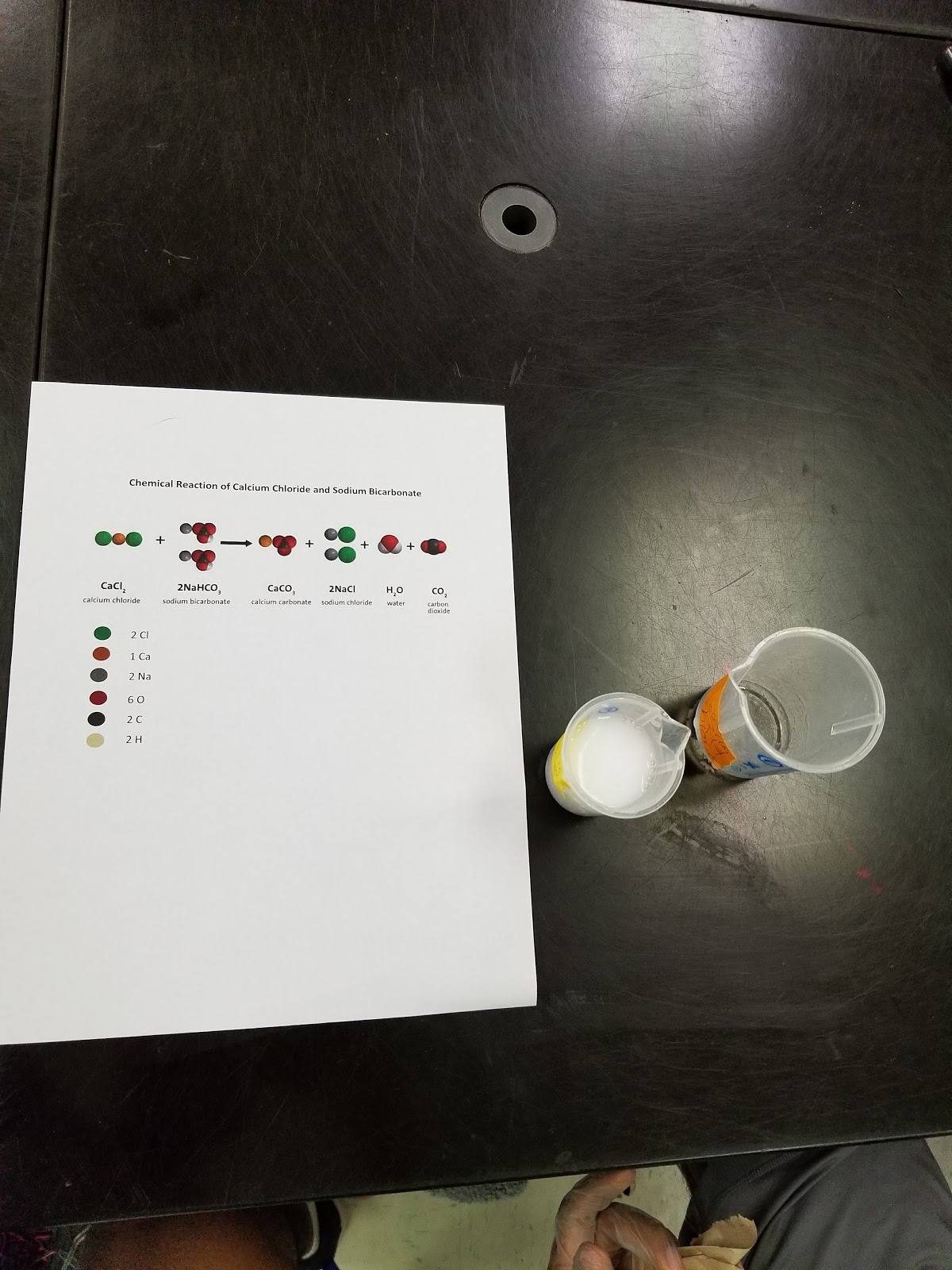
We mixed Calcium Chloride with Baking Soda.  This causes a reaction in which salt, carbon dioxide, and water are formed as well as calcium carbonate.  Calcium carbonate is basically chalk.   So once the mixture was mixed there were bubbles forming which was the carbon dioxide and a lot of white stuff which is the calcium carbonate.


Here is the procedure as well as the reaction.


Thanks Davis Drive for having us!


Monday, October 30, 2017

2017 FFA Convention: Meet the next generation of leaders and Agvocates


There are some days where we can all use a little inspiration and even hope in our lives.   I look at the headlines and I see war, wild fires, natural disasters, and a whole host of things that make us all worry about the future.   Well I got a transfusion of inspiration and hope at the yearly FFA convention held in Indianapolis, Indiana.   I knew of the FFA (Future Farmer's of America) when I was in high school, but it was an organization I never joined.  However over the course of 3 days I have come see that organization is a force to be reckoned with as it prepares and builds leaders not only for agriculture, but for all aspects of life. 

As I came down the escalator at the airport there was a big sign welcoming the FFA.   This was my hint as to how big this conference was going to be.  The motto for this year is "I CAN, I WLL" which I absolutely love. 


The FFA literally takes over the downtown of Indianapolis for a few days.  Everywhere you look you see blue jackets.    On the back of those jackets is the state along with the high school, county, or other local area each student is from.   I was fascinated all week on studying the backs of hundreds of jackets to see how far and wide the FFA, and our US farms are spread.  Actually all the states and territories were represented at the conference except the US Virgin Islands.   My colleague and I got into a competition to get autographs from all the states.  I lost since she got every single signature (Next time Brittany!).   But I met someone from almost everywhere as well.


I was at the FFA to represent Bayer CropScience with an awesome team.  We had a beautiful booth surrounded by so many other brands.  Tractor Supply company was right beside us doing karaoke and dancing all week so we also had a lively spot.  Carhartt and Wrangler were also right beside us.   And of course Monsanto, Syngenta, Dow and many others were all representing their businesses and showing these future leaders the types of opportunities available for them.


Besides sharing general information about Bayer CropScience we focused on information about bee health.  We also wanted to share how important it is to Agvocate about agriculture in general.  We had a huge Agvocate wall for FFA members to help us fill up.   There were 5 "hands" and each person that visited our booth could choose 1 to throw on the board.  The choices were

MENTOR -  You love to teach!
LISTEN -  You are a great listener!
JOIN - You join communities to share and talk about agriculture!
SHARE - You use all the social media outlets like Snapchat, Instagram, and Twitter to Agvocate!
PROVIDE - You use political channels like writing your local government officials to Agvocate!


On day 1 our wall was starting to fill up and when we left on the final day the wall looked awesome.  The trends that showed up were we have lots of Mentors, Sharers, and Listeners.   There was a much smaller group of the FFA that were posting about the political route to talk about how to agvocate and illicit change within agriculture.   I found this intriguing.  From conversations there seemed to be a level of distrust among this generation of the government, but all the more reason to get involved.


Other companies were sharing the same messages about being an Agvocate.  And there were people (future leaders and farmers no less) talking about how good GMOs.   What a refreshing environment to be in!


Through the course of the week, I spoke to so many kids.   They were so engaged and well mannered.  We are talking about over 50,000 kids in Indianapolis and NOT ONCE did a FFA member come through not tell me thank-you or use yes sir.  This is how I was brought up in rural America and I could only smile and feel pride that this tradition of kindness and manners still survives throughout all of America.

As I talked to so many kids I would get involved in so many great conversations.  I asked a few of the visiting FFA kids if they would mind sharing their impact statement or what inspires them.   Here are just a few snippets of the type of leaders we have coming to help lead this country in agriculture and other parts of our society. 


Doster Harper

"I plan to research beekeeping efforts to increase the sustainability of our environment and the world"

By the way at the very end of the conference Doster visited the booth again.  He said his adviser asked each member of his group to go back and get a picture with their favorite booth.  Doster, thanks a lot for making my day when you visited me again!


Allie Julian

"I had an amazing ag teacher and she made all the difference.  She told me I had potential and I believed her!"


Zach Jacobs

"I want to be the voice for farming on capitol Hill and help bring a positive view to agriculture."

By the way, GO HOKIES! Zach!


Graceyn Newland

"An impact I would like to make on agriculture is educating the public about the industry and the people supporting it through social media.  As the reporter of my (FFA) chapter, it is my passion to use the up coming scene of social media for educational purposes.  Social media is the new way to reach and audience and I would love move than anything to seize the opportunity and make a difference to ensure the stability of agriculture as we progress.


Shane Stubblefield

"An impact I would like to make is to close the information gap between producers and consumers to create a better understanding of agriculture and its crucial role in feeding the world."


Dalton Beasley

I would like to alter crop genes to where pesticides are obsolete."


Bailey Morell

"I want to start a career in Ag law in order to promote the Ag industry from a positive perspective and from someone who has a personal tie to the ag industry."


Zannah Tyndau

"Coming from an agricultural family and growing up on my family's farm, I have seen the importance of agricultural advocacy.  I aspire to become a lawyer to voice my opinion in government and stand up for those who work to food on my plate 3 times a day.  I will have an impact on ag by advocating for agriculturalists in government and politics."


Makenzie Snyder

"I've grown up on a farm and seeing our family transition to GMO crops, the impact has been immense.  I've spent so much time looking into GMO processes and impacts on the world.   I want to be part of that impact, making more and more food for our growing world.  I am a strong advocate for GMOs and everything involved."


Aleyana Boothe

"I would like to research and communicate what I learn about things happening in the environment.  I believe that the knowledge is power so if I can teach and make people aware of anything then they can use what they learned to educate others.  I would like to use education and use technology to impact the future of agriculture. 


Grace Holzer

"I hope to communicate to and educate the public about the agriculture industry.  I will do so by utilizing social media and the tools of broadcasting.   My goal is to teach them about the past, present, and future of Ag!"


Lynnsey Winchell

"I hope to bring passion back to the industry.  Many times we are caught up in the money and the politics.  Remember why we continue and why we continue regardless of the struggles, both mental and physical.  We love what we do,  so remember it is worth it.  Stay strong to your beliefs and in the beliefs in the society we live in today.  For I believe that American agriculture can and will hold true because of the passion we hold in our hearts. 


I cannot even begin to describe how impressed I was with the FFA and it members.  This includes the advisers who took the time to help get these kids to their destination.  In the majority of cases large groups were driving.  This was routinely a 6-14 hours drive.   The organization is a really a student led and it was running better and more organized than some bushiness I have seen.  I will forever cherish my time at this convention and the conversations I had with these kids and my other Bayer Colleagues.  I can't wait to try and touch base years from now and see where they are.


Monday, October 2, 2017

Setting up a saltwater fish tank - PART 1: Tank, Sump and Plumbing

Many years ago, I had a 55 gallon freshwater tank that I decided to turn into a saltwater tank.  I kept it pretty simple with mostly fish and a couple coral.  We then had our first child and decided to move to a new house.  I sadly tore everything down, sold my fish and coral, and missed the hobby.  Fast forward 3 kids and almost 10 years later and I decided I wanted to get back into the hobby. 

I quickly learned that I had forgotten everything I remembered about the saltwater hobby.   I read so much and tried to piece together what I would need to get, but it took time and a few mistakes.   So I am going to try and capture how I set my tank up in the hopes that other's who may want to get into the hobby can learn from my mistakes and learn what worked as well.

1.  A TANK AND STAND

I was taking my time on finding a tank.   Eventually I found a tank that had never even been used on Craigslist along with a stand.  The tank is a 125 gallon tank (72" x 18" x 24") and the guy I bought it from gave me the stand he had built.


2. SUMP

This tank already had 2 pre-drill holes and two overflow boxes in each corner.  Every tank can be different in how water will drain so I was lucky in that mine was already set up.   Once you figure out how your drains will be set up, the next thing to figure out is what your sump will look like so you can then design the plumbing.   For a saltwater tank you want the water to drain into the overflow boxes(or drain system you have on your tank),  drain into a sump (just another tank) and be pumped back up into the tank.     Sumps are just another tank that have compartments to place different pieces of equipment.   The sump hides all the equipment you will use as well, cycles your water, and adds more gallons to your system.  The bigger your system, the easier it is to keep it stable. 

 I have to say at this point I did not know how to proceed on building a sump.  This is where I advise go talk to people in the hobby.  I went to my local fish store, Fintastic in Cary, NC and they were a huge help.  In fact they built my sump for me.  We chose a 55 gallon tank with a 3 compartment design.  This is what the design and final sump looks like:


There is a lot of stuff in the sump.  I will go through all of the equipment in post Part 2.     As for the sump itself, the guys at Fintastic did a great job.  If you want you can build a sump yourself or even buy one already made.  When I was pricing sumps, it is much cheaper to build one yourself as opposed to buying one  The only real work you need to do is add baffles to make the chambers.  These baffles are just glass or Plexiglas that you will need to cut and glue in place.    In my case I have three chambers.   The baffles are placed in groups of three to keep bubbles from forming as the water moves from left to right through the sump and eventually pumped back up to the main tank. 

There are a couple of things to think about when building a sump.   The first is make sure it will fit the equipment you will place in the sump.   The other thing to remember when choosing a sump is to chose one that will not overfill in the case of a power outage.  When everything is set up and power is running, water is going to drain from the main tank, go through the sump and be pumped back up to the main tank.  When the power goes out, the return pump stops working so water drains to a certain level in the main tank, but is not pumped back up.   This means your sump will collect more water than normal so just make sure it can hold that extra water.  When I lose power, my 55 gallon sump fills about halfway up.

3.  PLUMBING - DRAIN LINES

We now have a tank and a sump and so the next thing to do is plumb your tank so you connect the two.  First decide where you are going to locate your sump underneath the stand.  This will help you decide where any pipes you run will need to go.  In my case I put the sump all the way to the left side underneath my stand. 

In my case I have two pre-drilled holes in each corner of my tank with an overflow.  The first plumbing adventure is to take piping from each hole down to the very left side of my sump.  The first chamber of my sump is where I will have water draining from the main tank. 

This is where you need to make a a big choice.   You can use flexible tubing or you can hard plumb with PVC pipe or you can use a mixture of both.   I chose the latter to mostly use PVC pipe with some flex tubing. 

No matter which type of piping you choose, you need to get bulkheads to be able to connect your piping to the aquarium while keeping any water from leaking out of the holes. 

A bulkhead looks like this:


There are also strainers you can add to the water side of your bulkhead if you wish.   This is how you attach a bulkhead to your tank.  Put the threaded portion through the hole.   The rubber gasket should be on the water side.   Screw the nut on the outside of the tank hand tight and then screw it another quarter turn with pliers.   DO NOT OVER TIGHTEN!!


After the bulkheads are in you can start running your drain pipes.   I used 1" PVC pipe to go from my bulkheads to my sump.  Through this process I made a couple mistakes and also did a few things that were serendipitous that I really recommend.

a.  Bulkheads and plumbing-  Pay attention.   The very first mistake I made was I installed the threaded part of the bulkhead through the tank hole and was going to attach the first piece of PVC pipe.  I cut my pipe, glued it and added an elbow.   After gluing everything I realized i had not put the nut on the bulkhead and the nut would not fit over the elbow.  CRAP!   I had to cut the pipe and start all over.  Of course the bulkhead was now ruined.


b.  Bulkheads - don't go cheap.   After the idiotic mistake above I needed to use a new bulkhead.  The guy I bought tank from had given me two bulkheads.  I had bought two new ones because the ones the guy gave me felt a little bit lighter and were older.  But since I wanted to get my plumbing done I used one of them.   Fast forward weeks later after I filled my tank with water and I came home to water leaking in a steady drip at my bulkhead.  I tried everything to fix it and could not.   I had to make another cut just like in the picture above, buy a new bulkhead and redo that piece of piping.   Come to find out I had a small crack in the bulkhead flange that was causing the leak.  I knew the bulkhead felt a little cheap and used it anyway.  I paid for that mistake.   

c.   Use Unions!!   -  If you go the PVC route use unions.  I had decided I would use unions so I could break the pipe down into smaller pieces if I ever needed to relocate my tank.    In reality when i had the 2 mishaps above the unions made it much easier to just replace piping up to the union and not replace everything!  Thanks goodness I had unions or fixing my mistakes would have been more time consuming and costly.

d.  Ball valves - I have two overflows, two bulkheads, and so I have two sets of piping for draining water to the sump.  On each set of pipes I installed one ball valve.   I don't know why I did this other than I had read one forum post that someone did it and thought it looked nice.   Once my tank was up and going, the water draining into one of my bulkheads was making a terrible gurgling noise.  It was loud enough to drown out the TV when it was on.   I started reading about fixes and the first thing I saw was to use a ball valve to help eliminate the noise.  By restricting the water flow in your pipe to just what is needed to get the water through you eliminate the air going through the pipes.  The air is what is causing the noise.  I turned the ball valve just a little and the noise stopped!   Ball valves to the rescue!

e.   PVC pipe ends in flexible tubing.   -  I am glad I did this.   I have water going from the tank, through the pipes and into the sump.  I attached a small piece of flexible tubing the PVC pipe at the end which makes it much easier to divert water where I need to in my sump.   I glued a PVC tube adapter to the end of the PVC, attached a piece of flexible hose and used a clamp to make sure it is attached well. 


Drain Line Run #1:  This was the farthest run from the bulkhead to the sump.  You can see I have 2 unions and ball valve. 


Drain Line Run# 2:  This was just a straight shot from the bulkhead to the sump right underneath.


Drain Line Run # 2:  I used one Union and the ball valve is right at the bottom.   You can also see the flex tubing connected at the end of Run #1.   Run#2 is set up the same way (the flex tubing is not visible in the picture).


4. PLUMBING - RETURN LINE

We are now plumbed for water to drain, but we also need to be able to get water back up to the main tank.  The last chamber of my tank will house the return pump.   i again went the flex tubing and PVC combination route.

I have a piece of flex tube running from the pump and then connected to PVC.   For the reture line run I used 3/4" PVC pipe instead of 1".    I used flexible tubing first on the recommendation that PVC attached directly to the reture pump can cause more vibration noise than if you use flex.   The flex tubing attached to the return pump also lets me move the return pump around in the sump a little move and gives flexibility if the return pump breaks and needs repair.  And that is a story I will share in a future post. 

My design was return pump -> section of flex tubing -> PVC pipe.   As the PVC pipe comes up to the top of the aquairum I used a 90 degree elbow and connected loc-line to split it to Y and go back into the tank. 

I bought the loc-line supplies at Bulk reef supply.


Just use the Y fitting to connect the loc-line hose.  These loc-lines are easy to bend and move around.


The water return:   Flex tubing to the PVC with a union.  The union will help if I even need to take the system down or make repairs.   The loc-line is at the top and will take the water back in the tank.


The entire system after all plumbing and before water has been added.


I will go over all the equipment you need to get your tank running in Part 2. 

Monday, September 18, 2017

Is the consumer confused on GMOs?

I love to see surveys that help to show what consumers think.  It is a great way to shed some light on where we need to focus when trying to educate and share the facts about our food and agricultural industry.

A recent survey from Michigan State had a few interesting insights.  Here are the results of the survey and my personal commentary on the results. 

If you are looking for the survey itself you can find it here:  http://food.msu.edu/articles/msu-food-literacy-and-engagement-poll


This is a pretty easy answer for me too.   If I could eat a banana right off a tree vs one that was pulled green and allowed to ripen in the store then I am picking the one off the tree.  While this is not always feasible, I love my tomatoes fresh from the garden.   My opinion falls right in line with most of the responses here.


As expected, labels influence all of us and can be very useful.  There are many labels on our foods and we all expect some labels to be there.  I like to look at a label and see how many calories or cholesterol it may have.   However I know these labels are truly to help me make a decision for my health.   My gripe is when labels are used for pure marketing purposes.  As an example let's take salt.  Salt is not living, it can't be genetically modified, so why does it have the label?  To make money off peoples fear?  Maybe.


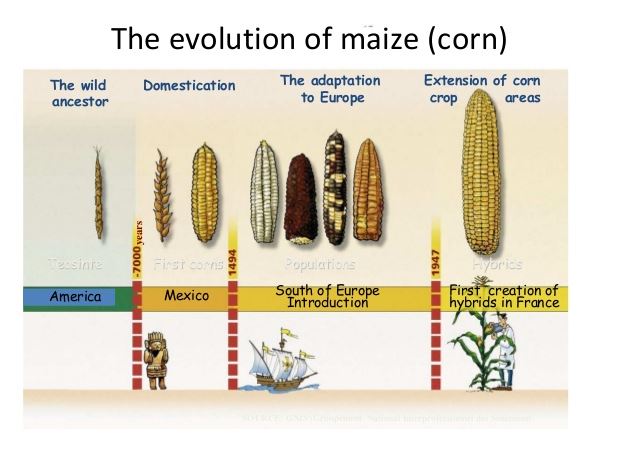
Labels are important when they truly help you make an informed decision on your health. But why do we need a label when we have 20 years of data showing no evidence that GMOs are unsafe.  The non-GMO label is a marketing scam in my opinion.   That "non-GMO" corn you may eat technically is genetically modified from crossing.  Here is what corn used to look like and yet even though hundreds of genes have been changed between what we eat now and what corn used to be, there are worries.  Yet it is this same corn that could carry a "Non GMO project" label!! 


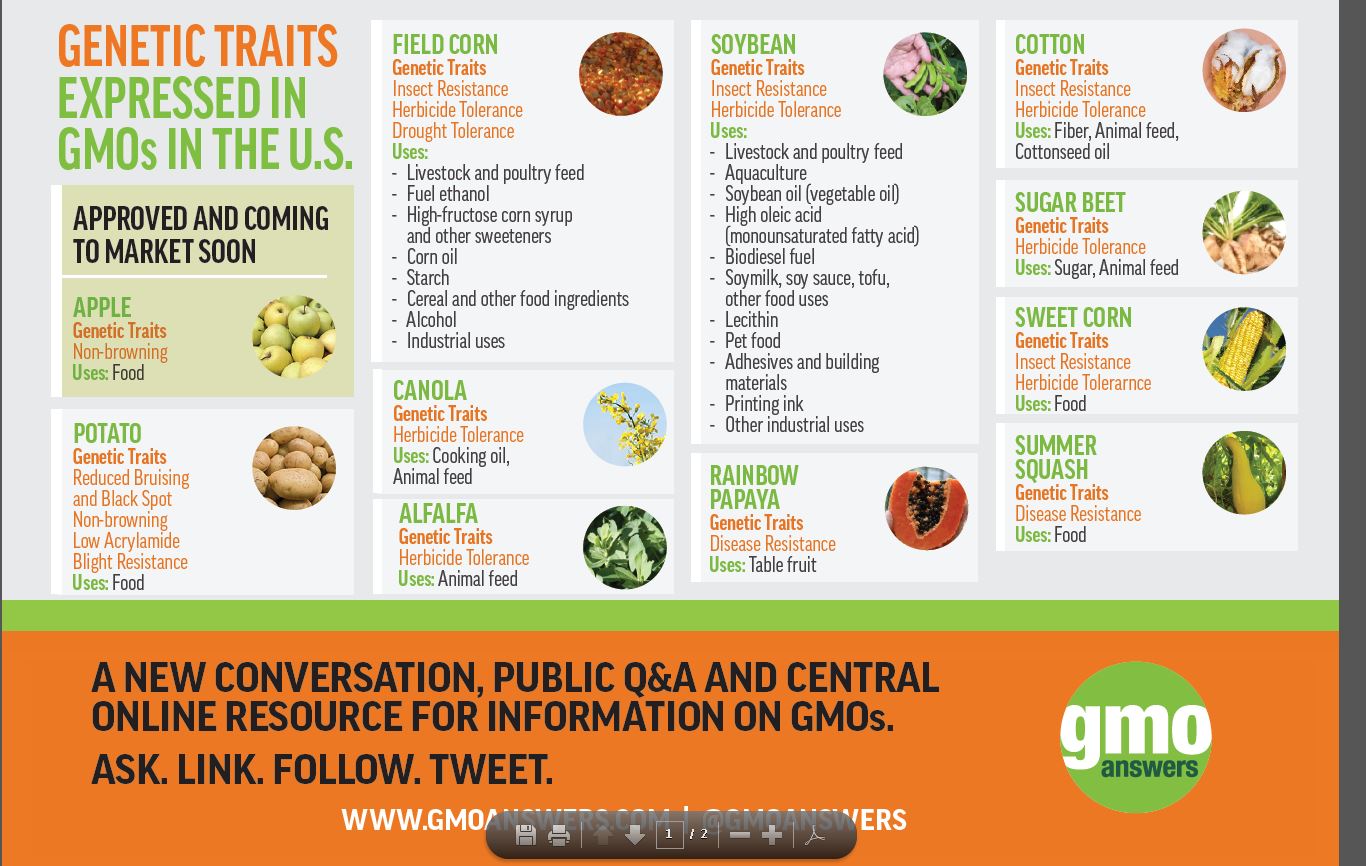
There is a large "I'm not sure" answer to this one.  Hopefully this info graphic will help shed some light on the those who are unsure.  These are the only commercially available GMOs sold in the US.  So that means if you are eating a strawberry or a steak, you are not eating GMOs because none exist on the market.


 The only thing I want to hammer home here is that by the year 2050 we need to feed a lot of people!  There is a lot about the global food system that we all can learn, but one important fact is the system needs to feed a LOT of people in the coming future.  Understanding that humanity has a challenge that we all need to address and think about goes a long way towards wanting to understand how the global food system works.

Here are the facts taken from the United Nations.  https://www.un.org/development/desa/en/news/population/world-population-prospects-2017.html


The answers are pretty split on this questions.  Some people are looking where their food is coming from and some do not.  The places our food comes from can be local or it could have come from another country.  It is always interesting to pick one thing we eat and try to do the research on where it comes from.

From a very basic high level I love these maps from national geographic that show exactly where we grow food in the world.

Theses maps comes along with a really nice article to read as well:  http://www.nationalgeographic.com/foodfeatures/feeding-9-billion/


This is our Earth and this is where we raise crops and animals.  No more land is being created and the locations we are producing our food is pretty much it.  Even with the population going to crazy numbers by 2050, this is what we have.

 The biggest thing we can do in the fields themselves is raise our yields.  This National Geographic map shows how yields currently stand.  This maps always makes me get a little nervous.  Yields are already high in many parts of the world.  There is room for improvement, but the way we produce food will need to change.  This will range from agricultural practices and political policy changes and everyone should try to understand where our food is coming from and how it is grown to help with the coming challenges.


This trend to pay more for "healthy food" seems to be gaining traction at least in surveys.  In another survey in 2015 the same trend was seen:

https://www.forbes.com/sites/nancygagliardi/2015/02/18/consumers-want-healthy-foods-and-will-pay-more-for-them/#1a6afa2f75c5


I think it really remains to be seen how all of this will play out.   I have a couple of thoughts.  Maybe US and even European consumers are willing to pay more, but they also have more money.  How about the other billions of people in the world that need to eat?   I admit I can quickly become siloed in my bubble where I have the means and choice to buy more expensive food if it really has less sodium or some other health benefit.

I also think that the word "healthy" is not defined the same across our population.  I may think sure, if product A and B are mostly the same but B has less bad cholesterol it is heather.  However if product B is GMO then I also believe it is healthy and I know for a fact many don't believe that.

Regardless I think this quote from the same Forbes article sums it up quite nicely.


I am concerned about the safety of my food too.   Who wants to go to a store, buy some lettuce and come away with a E.coli infection.   No one with a peanut allergy wants to to eat chips and have an allergic reaction because the chips were processed in a plant with peanuts.   And of course we wonder how GMOs will affect our food.  Are they safe?   Hey I wouldn't be a good scientist if I didn't ask the same questions.  I feed my kids GMOs, but because I believe in their safety.  Here are some great infographics that summarize the facts.  You can find those reports and literature with some google searching if you really want to dig in.


Organic practices yield food that can also be safe and taste good.  My biggest concern with orgainics goes back to question 5.   Once we realize that our population is going to up in a crazy way, then we realize we need to produce more food.  And the facts are pretty straightforward.  Organic is not the answer to increasing yields.   Take a good look at this study and I have attached a few slides from it as well.

https://www.scribd.com/doc/283996769/The-Yield-Gap-For-Organic-Farming


Here is some info on the study:


 This is just one set of data form that study.   Organic yields are way down for row crops compared to conventional growing methods.   As the author states, right now organic is niche, but why put so much effort into this method of farming when it is not doing anything for our world problem?


This question saddens me most I think.  I have worked in industry for about 15 years.   These questions show that industry has the most work to do to gain trust back from consumers.   I can offer to answer any questions anyone may have.   I actually love giving tours at work.  Usually the response is "wow!  that was really cool.  I know know a lot more about you do."   Find someone who works in industry and have a conversation with them.

I can promise that I believe in what I do and am happy to answer any questions.  We are people that care about our family and friends just like you.


This is the question that leads me to believe the most that consumers are confused.  The fact on this one is all living things have genes.   So GMO, organic, non-GMO, bananas, fish, human, ants, and everything in between is full of genes.  The fact that 37% of people in this survey think only GMOs have have genes show that we still have a long way to go towards understanding our food.  

All plants and animals have cells.  While there are differences in the cells,  DNA that are home to all these genes are found mostly in the nucleus.

https://www.difference.wiki/plant-cell-vs-animal-cell/


Science uses many different techniques to to mix up this DNA and create new traits.  In many ways all of our food is a GMO because genes were moved and modified to give us everything we currently eat.


When it comes to food people have very strong opinions, even if those opinions are not based on facts.  In fact a quick google search shows all kinds of information that aims to use fear to persuade you that GMOs are bad.  And when so many people think that only GMOs have genes it is real easy to persuade them that GMOs are bad.   We have to keep getting the facts out there and I hope these resources and thoughts will be a start.